
Vox Cyber — editorial — Monday, November 9, 2026
The Attack: One October Night, 700 Stores Hit
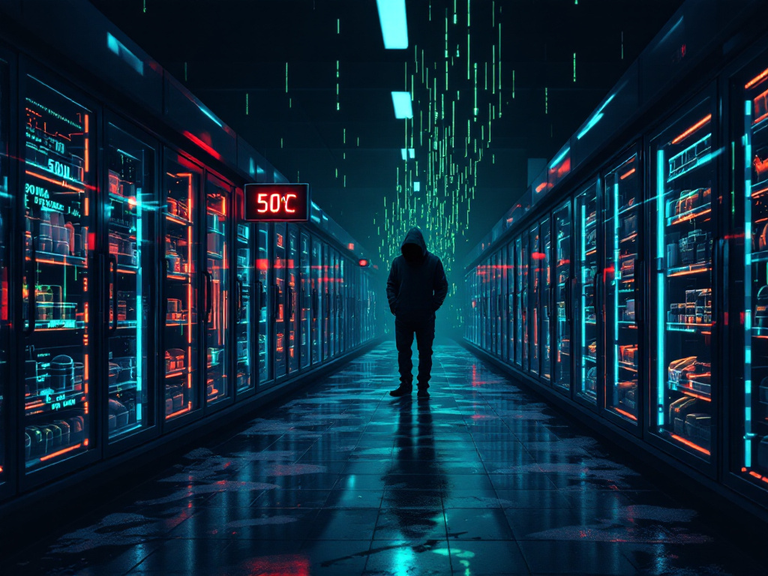
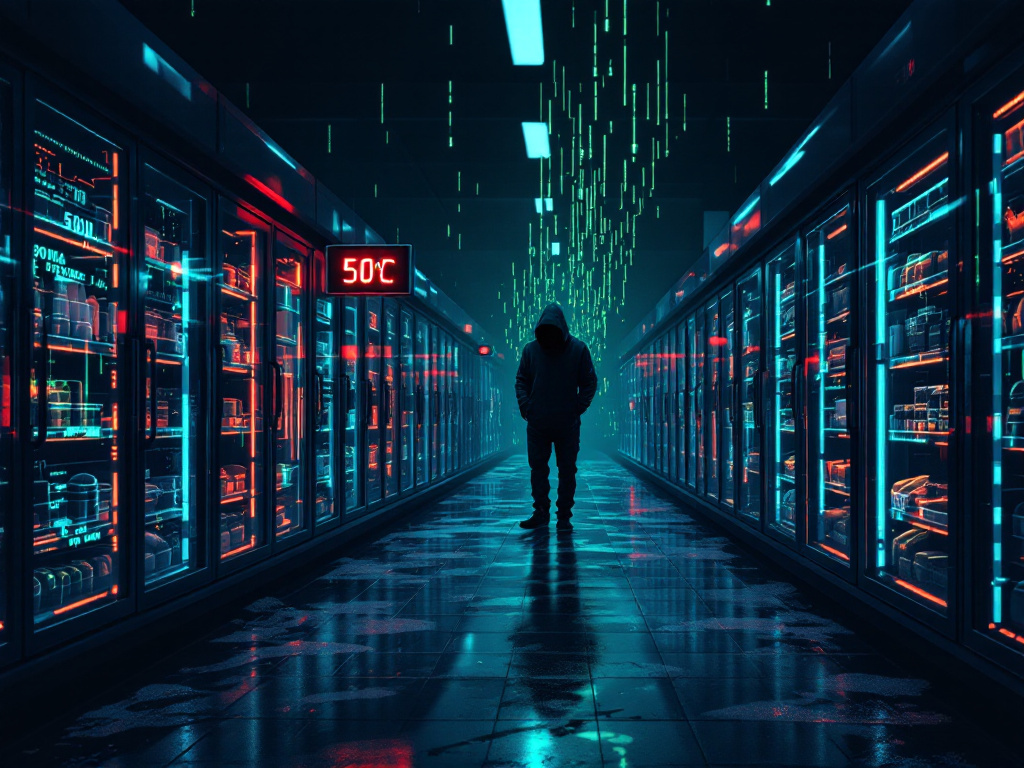
On the night of October 11–12, 2026, several major French retail chains (including Coopérative U and Intermarché) discovered an unprecedented scenario: the remote control systems of refrigeration units in around 700 stores had been hacked. Cold-room and freezer temperatures were tampered with — some equipment was programmed to run as high as 50 °C — forcing the chains to throw away huge quantities of spoiled goods.
The attack’s vector lay in the connectivity of this industrial equipment: the hackers seized control of supervision systems (notably those made by the Danish manufacturer Danfoss and Italy’s Dixell), once managed locally and now remotely operable over the Internet. According to experts, the intrusion most likely exploited technical vulnerabilities and/or compromised credentials on sometimes aging equipment. The Paris prosecutor’s office described the attack as “unprecedented” in scale, with consequences including massive food losses and even outbreaks of fire.
The Attribution: The Shahid Kaveh Group, Cyber Arm of the Revolutionary Guards
On Monday, November 9, Paris prosecutor Laure Beccuau opened a judicial investigation targeting “the head of the Iranian Shahid Kaveh group, a cyber-offensive unit affiliated with the Electronic and Cyber Center of the Islamic Revolutionary Guard Corps (IRGC-ECC),” along with his two deputies and “any other individuals who may be identified.” The investigation has been entrusted to the Office for the Fight against Cybercrime (OFAC) and the DGSI, France’s domestic intelligence agency, under the supervision of investigating judges.
The findings of France’s intelligence services rest on several converging elements: a modus operandi characteristic of this unit, the use of Farsi within the attack infrastructure, and IP addresses pointing back to terminals located in Iran. The charges brought are severe: fraudulent intrusion into automated data-processing systems and damage by means dangerous to persons, both committed by an organized gang and aggravated by having been carried out “with the purpose of serving a foreign power, namely Iran,” in addition to criminal conspiracy to prepare a crime.
On the diplomatic front, Minister for Europe and Foreign Affairs Jean-Noël Barrot confirmed: “I am in a position to confirm that responsibility for this attack lies with the Islamic Revolutionary Guard Corps of the Islamic Republic of Iran. It is unprecedented in scale.” Iran’s ambassador to Paris was summoned, and France announced coordinated sanctions “at the European level” against all those responsible for the attack. EU foreign policy chief Kaja Kallas said “our response should be strong.” Tehran has not yet responded publicly; Iran routinely denies any involvement in malicious cyber operations.
The Consequences
- Economic: massive disposal of food products across hundreds of stores, business interruptions, and broken cold chains for the affected retailers.
- Health and safety: food-safety concerns and several reported fires. On November 2, a similar attack struck a dozen European countries (Belgium, Sweden, Italy, the Netherlands, Finland, Ireland, Estonia, Luxembourg, Portugal…), and on November 4, cold rooms at the French Blood Establishment (EFS) were hit through a refrigeration contractor — with no identified health impact at this stage.
- Political and legal: a judicial investigation targeting leaders of the Shahid Kaveh unit, the summoning of Iran’s ambassador, and announced European sanctions.
- Strategic: the affair highlights the systemic vulnerability of connected industrial devices and equipment, and is fueling the European debate on securing the Internet of Things.
Why Would Iran Target France?
The official attribution comes against a backdrop of acute tensions between Iran and Western countries. Several factors shed light on Tehran’s logic:
- An escalation in the confrontation with the West. For months, the Iranian regime has threatened to expand its retaliation against the war launched by the United States and Western support for its adversaries. France, a leading European power and key Washington ally, is a natural target for this strategy of indirect retaliation, kept below the threshold of open conflict.
- Cyber shadow warfare as a pressure tool. The Revolutionary Guards have spent years building an offensive cyber arsenal (units such as Shahid Kaveh, attached to the IRGC). Striking civilian infrastructure — food supply, cold chains, health — is a way to test the resilience of Western societies and send a signal of nuisance without any official claim of responsibility.
- An already familiar modus operandi. The recent history of the Iran–West cyber confrontation — from Stuxnet, which struck Iranian centrifuges in 2010, to intrusion campaigns attributed to the IRGC — shows that “physical effects through digital means” has become a battleground for reciprocal strikes. The fridge attack is its mirror image: the digital realm used not to steal data, but to degrade the physical world.
- A show of force and deterrence. Hitting hundreds of sites simultaneously across several European countries, with tangible consequences (food losses, fires), serves a demonstrative purpose: proving Iran’s ability to strike anywhere, even in Europeans’ daily lives, at low cost and with plausible deniability.
The Vox Cyber Editorial
The hacked-fridges affair might look anecdotal. It is not: this is the first time a foreign power has been formally implicated in France in a cyberattack with massive physical consequences on civilian infrastructure at scale. The message cuts both ways. For Tehran, it proves that hybrid warfare can reach the corner supermarket’s refrigerator. For Europe, it demands acceleration: tightening regulation of connected-device security, securing industrial supply chains, and punishing state sponsors. The cold chain has become a battlefront. It is time to defend it as one.
Main sources: AFP; Paris prosecutor’s office (statement by prosecutor Laure Beccuau, November 9, 2026); statements by Jean-Noël Barrot and Kaja Kallas; Le Soir; RFI; CBS News; La Libre; webdo.